
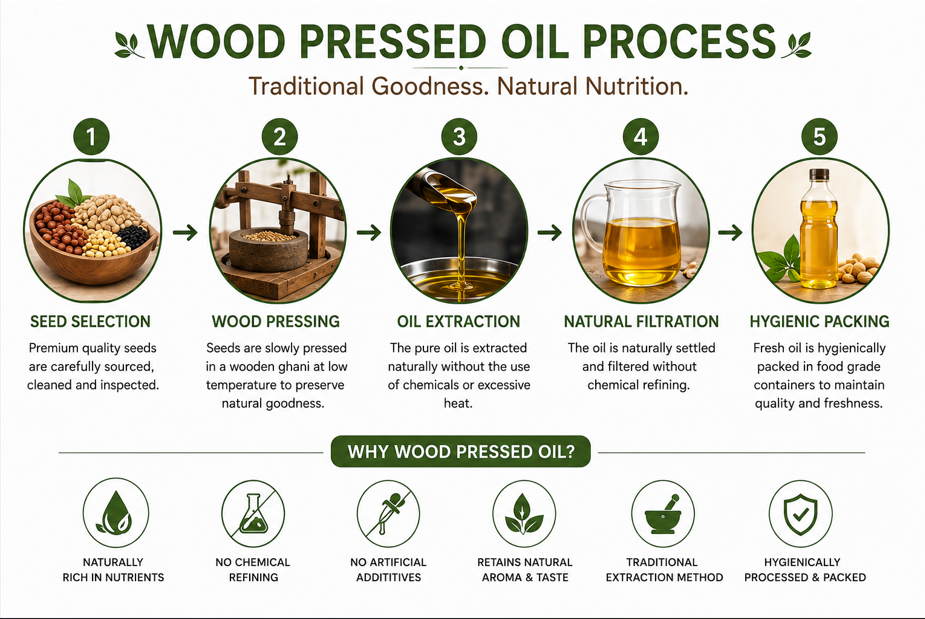
Wood pressing is an old method with a very modern appeal: it keeps the process understandable. Seeds are cleaned, checked and pressed slowly in a traditional wooden ghana instead of being pushed through aggressive refining steps.
A gentler route from seed to bottle
The speed and temperature of extraction influence an oil’s aroma, colour and character. Slow pressing is designed to reduce unnecessary heat while the oil is extracted. After pressing, the oil is allowed to settle and is filtered before hygienic packing.
- Carefully selected oilseeds are cleaned before pressing
- Slow mechanical extraction helps protect natural flavour
- Settling and filtration remove suspended seed particles
- No bleaching, deodorising or chemical refining is used
Why the flavour feels different
Minimally processed oils keep more of the seed’s recognisable aroma. Groundnut oil tastes gently nutty, sesame oil is deeper and coconut oil carries its familiar tropical note. That character can make even a simple tadka or vegetable preparation feel more complete.
Choosing an oil for your kitchen
There is no single oil for every family or every recipe. Groundnut oil suits everyday sautéing and shallow frying, sesame oil complements traditional preparations, while coconut oil works especially well where its aroma belongs. Rotate thoughtfully, follow the cooking method and use sensible quantities.
What to check on the label
Look for a clear ingredient list, batch information, net quantity, packing details and storage instructions. A trustworthy label should tell you what is inside without asking you to decode exaggerated claims. At Dellipure, our goal is simple: a short journey from good seed to an honestly labelled bottle.